
Last updated October 31, 2026
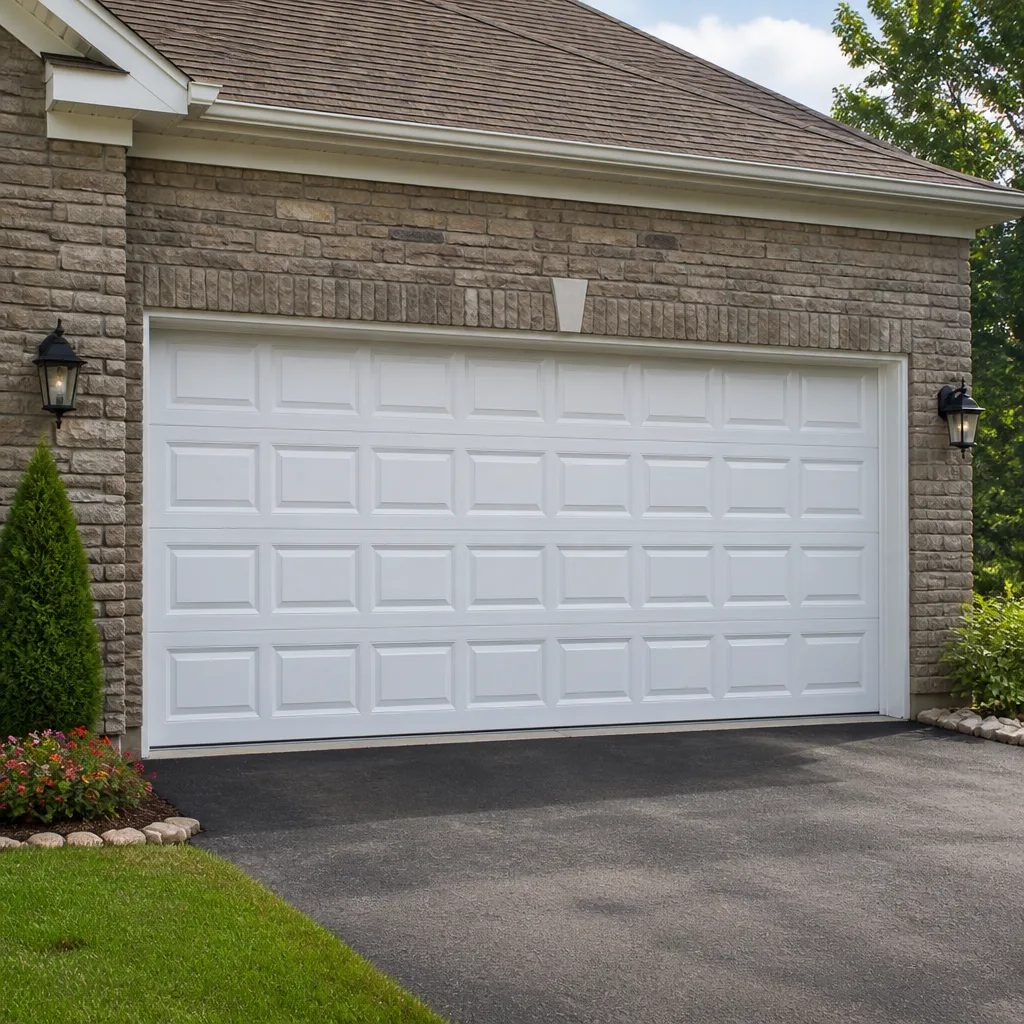 Raised-panel steel
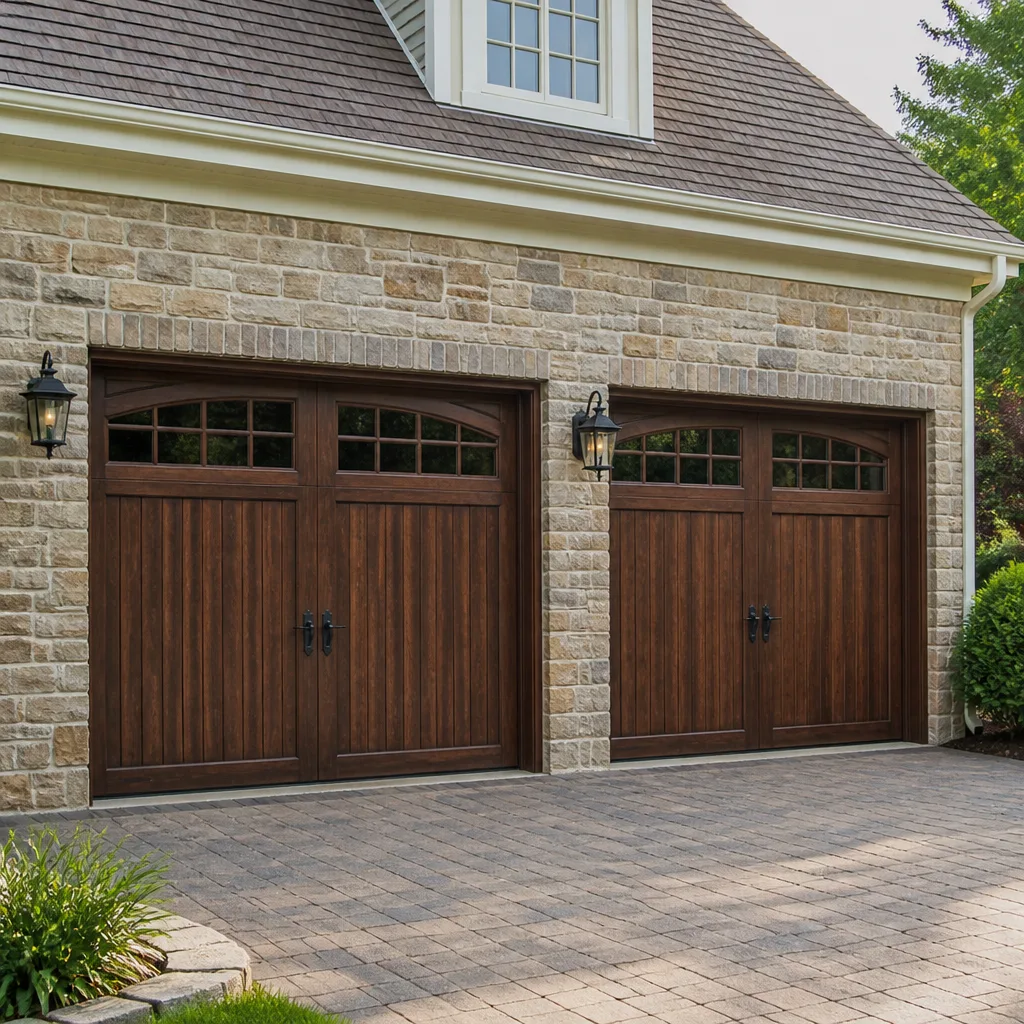 Carriage house
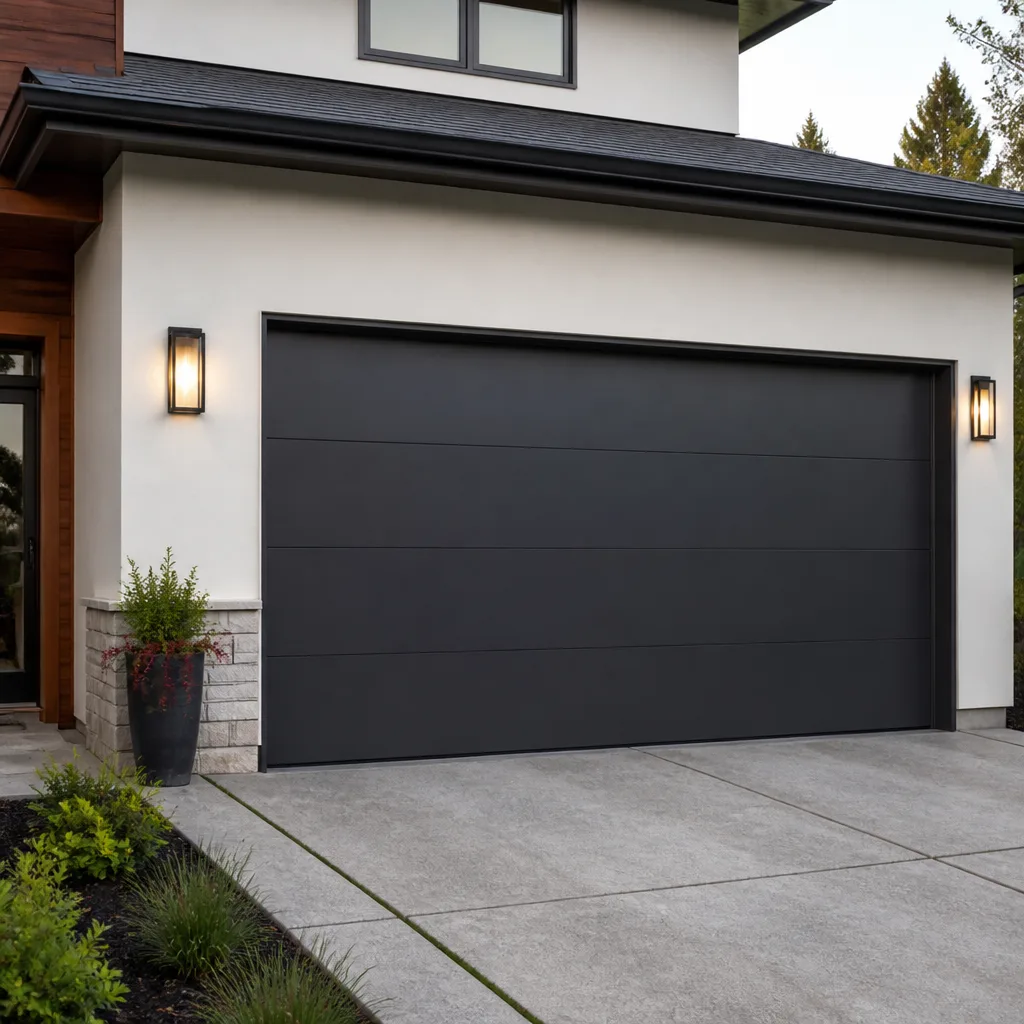 Modern flush
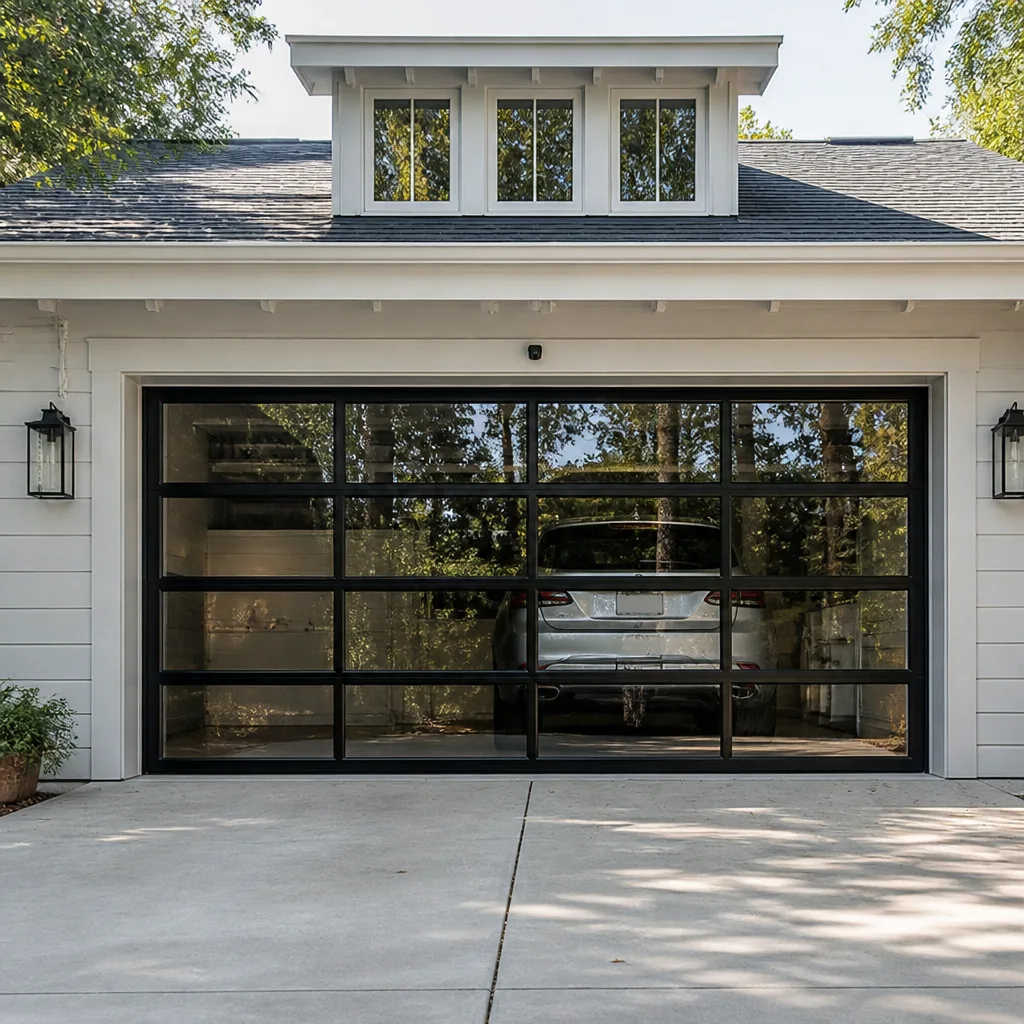 Full-view glass
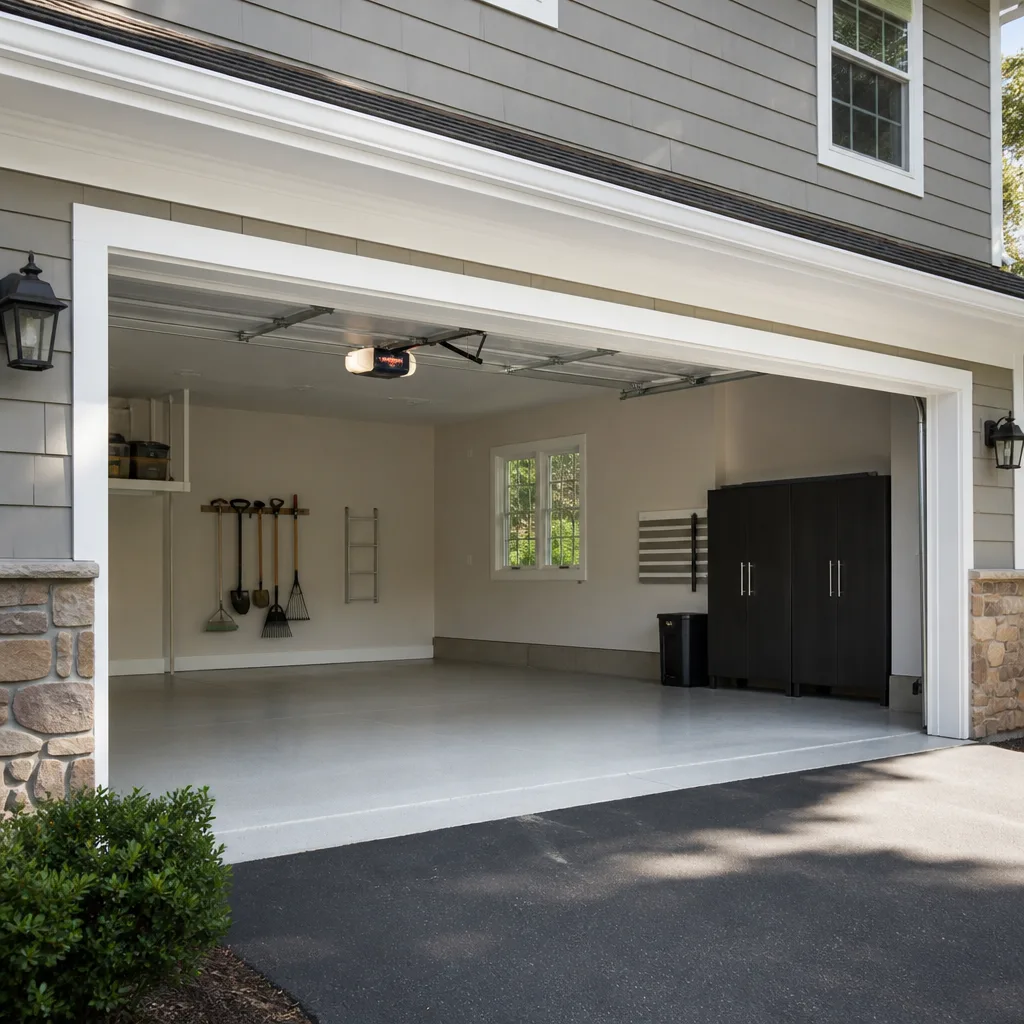 LiftMaster openers
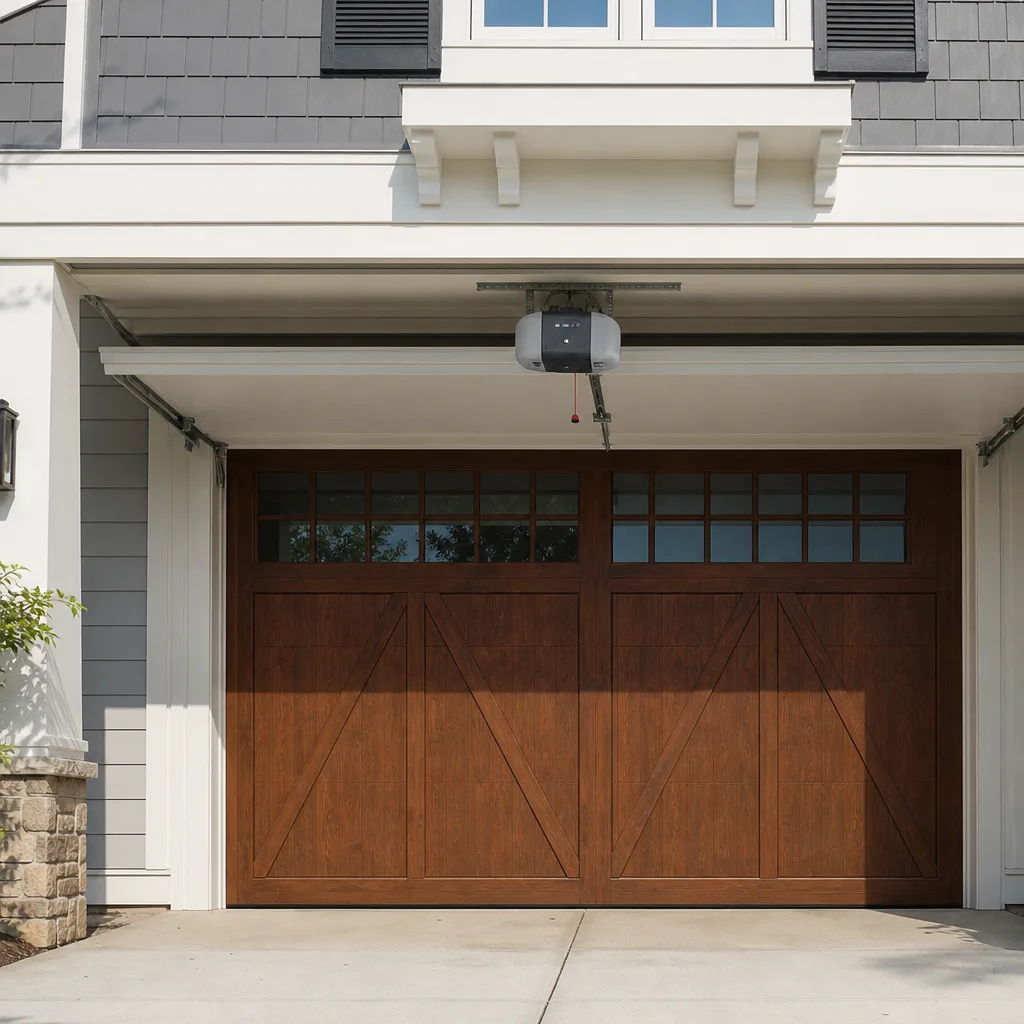 Chamberlain openers
Full 25-point door and opener safety check with every visit - springs, cables, rollers, tracks, and your LiftMaster or Chamberlain opener included
You get a price before we start. It does not change when the truck arrives.
Get your free estimateThe Complete Guide to Garage Door in San Marcos
Most “complete” garage door guides cover 40+ door types, but in San Marcos, fewer than 10 configurations account for roughly 90% of installs. Everything else is noise. This guide cuts straight to what actually fits a San Marcos home: the right steel gauge for our inland heat, the standard widths you’ll find in tract developments versus hillside custom builds, and the HOA rules that shape what you can put on your house before you order a single panel. For a full cost breakdown for 2026, see our dedicated pricing guide. We’ll walk through materials, openers, springs, costs, and the exact sequence a professional install should follow.
Quick Answer
A garage door in San Marcos needs to handle inland heat that runs 10 to 15 degrees hotter than coastal Carlsbad, which means steel gauge and insulation matter more here than most homeowners realize. Standard widths of 16 feet cover most tract homes, while older hillside properties in San Elijo Hills or Twin Oaks Valley often need 8-foot or 9-foot custom widths. Expect to spend $1,200 to $4,500 for a new door depending on material, insulation, and size, and always confirm HOA restrictions before ordering. Garage Door Installation in San Marcos walks through the full process.
Styles & brands we work with
Table of Contents
- Why San Marcos Heat Changes Your Door Spec
- Standard Door Sizes in San Marcos Homes
- HOA Rules That Shape San Marcos Door Choices
- Materials That Actually Hold Up Inland
- Openers: What San Marcos Homes Actually Need
- Springs and Hardware: The Parts That Matter
- The Full Install Sequence, Step by Step
- Common Mistakes to Avoid
Why San Marcos Heat Changes Your Door Spec
San Marcos sits in an inland heat corridor. Summer afternoons regularly hit 90 degrees, and exposed west-facing garage doors absorb direct sun from roughly 2 p.m. until sunset. That heat does two things to a garage door: it warps thin steel panels and it breaks down cheap insulation faster than coastal temperatures ever will.
Steel gauge is the spec most guides skip. The lower the gauge number, the thicker the steel. A 27-gauge door is standard on budget installations, but in San Marcos, we tell homeowners to step up to 25-gauge or 24-gauge on any west-facing or south-facing garage. Thinner 27-gauge panels flex in heat, develop oil-canning ripples that never fully flatten, and dent when a basketball or bike hits them while the metal is warm and soft.
Insulation matters for a different reason here than in cold climates. You’re not keeping heat in; you’re keeping heat out. A garage in San Marcos can hit 110 degrees on a hot afternoon, and that heat migrates into any room above or adjacent to the garage. A polyurethane-insulated door with an R-value of 12 to 18 will keep the garage 15 to 20 degrees cooler than a non-insulated door, which directly affects your air conditioning load if you have a bedroom or bonus room over the garage.
Bottom line: if a contractor quotes you a door without asking which direction your garage faces, you’re getting a generic quote, not a San Marcos quote.
Standard Door Sizes in San Marcos Homes
San Marcos has two distinct housing stocks, and they use different garage door sizes. If you know which one you’re in, you’ll know which door specs apply before anyone measures anything.
Tract developments – built mostly from the 1980s through the early 2000s – dominate areas like San Elijo Hills, Discovery Hills, and Santa Fe Hills. These homes typically have two-car garages with a single 16-foot-wide by 7-foot-high door. Some have two separate 8-by-7 doors instead. The 16-by-7 is the most common door in San Marcos, and parts for it are the easiest to source same-day.
Custom hillside homes in Twin Oaks Valley, parts of Palomar Heights, and older ranch properties built in the 1960s and 1970s often use 8-foot-high doors instead of 7-foot. Some have 18-foot-wide openings. A handful of older properties still have 9-foot-wide single doors. These non-standard sizes matter because they change your spring spec, your opener’s lifting capacity, and often your lead time for panels. A 16-by-7 door can usually be sourced and installed within a week. An 18-by-8 custom door might take two to three weeks.
Why does this matter for openers? An opener sized for a standard 16-by-7 door isn’t necessarily right for a heavier 18-foot-wide insulated door. The motor has to work harder, and the springs have to be matched to the door’s actual weight, not to a chart from 1990. When we service an opener in an older San Marcos home, we check the spring balance first. Most opener failures on oversized doors trace back to springs that were never re-spec’d for the door’s true weight.
HOA Rules That Shape San Marcos Door Choices
San Marcos has a high density of master-planned communities, and most of them have an HOA with architectural review authority over garage doors. This is the step homeowners skip, and it’s the step that creates the most expensive mistakes.
Here’s what we see across San Marcos HOAs:
- Color restrictions: Most HOAs require garage doors to match or complement the home’s trim or front door palette. Earth tones, warm whites, and wood-look finishes in specific shades are common approvals. Bright white on a home with tan trim often gets rejected.
- Material restrictions: Some communities in San Elijo Hills prohibit certain materials entirely. Vinyl doors are occasionally banned. Wood requires specific stain tones. Steel with a wood-look finish usually passes, but the specific finish matters.
- Window restrictions: Garage door windows are a frequent point of contention. Some HOAs limit the number of window panels, the glass type (frosted or obscure required in many cases), and even whether windows can be placed in the top section only.
- Replacement rule: Even if you’re replacing a door with an identical one, many HOAs still require an application. The review can take anywhere from a week to 30 days. Start this process before you order the door.
The practical move: call your HOA management company or pull your CC&Rs before you select a door finish. We regularly help San Marcos homeowners through this by providing the spec sheets and finish samples the HOA board wants to see. A door that fails architectural review isn’t returnable once it’s custom-ordered.
For new doors and full replacements, Garage Door Installation in San Marcos covers what to expect from the process, including the HOA review timeline.
Materials That Actually Hold Up Inland
Every material has a use case, but in San Marcos, four materials account for nearly every residential install. Here’s the honest breakdown:
Steel (24- to 25-gauge, insulated): The workhorse for San Marcos. Holds its shape in 95-degree heat, resists dents with the right gauge, and takes a wood-grain or smooth finish that satisfies most HOA color palettes. Clopay and Amarr both make solid insulated steel lines that we install regularly. Expect 20 to 30 years of life with basic maintenance.
Steel (27-gauge, non-insulated or thin-insulated): Common on budget installs and many original tract-home doors. It works, but it’s under-spec for a west-facing San Marcos garage. We see these doors ripple after five to seven summers and dent from routine driveway activity. If this is what you have, you don’t need to replace it tomorrow, but plan for it eventually.
Wood and wood-look composite: Beautiful, and some HOAs in higher-end San Marcos communities want real wood. The tradeoff is maintenance. Real wood needs resealing every two to three years in our dry climate, or it cracks. Wood-look steel or composite gives you most of the look with none of the upkeep, and it’s become the more common choice even in upscale neighborhoods.
Fiberglass and vinyl: Least common in San Marcos. Vinyl can work in specific situations, but the material gets brittle with age and sustained heat exposure. We rarely recommend it for west-facing openings.
Wayne Dalton and Craftsman both produce lines across these categories, and parts for Wayne Dalton’s TorqueMaster spring systems and Craftsman’s opener line are available to San Marcos technicians same-day in most cases. What matters more than brand is the gauge, the insulation type, and whether the panel is sized correctly for your opening.
Openers: What San Marcos Homes Actually Need
Garage door openers in San Marcos face two issues specific to this area: heat and hillside power interruptions. The heat shortens capacitor and logic board life on cheap openers. The occasional brownouts and SDG&E public safety power shutoffs mean a battery backup is useful even if you don’t think you need one. For a full emergency preparedness plan, see our dedicated guide.
Here’s what actually matters for a San Marcos opener:
- DC motor with soft start and stop: Quieter than AC, longer lasting, and smoother on the door. Worth the upgrade for attached garages.
- Battery backup: During a power shutoff, a non-backup opener means your car is locked in the garage unless you release the emergency cord. Battery backup solves that. It’s a real consideration for San Marcos hillside homes.
- Smart connectivity: Most LiftMaster and Chamberlain openers now include myQ by default. Useful for confirming the door is closed when you’re at work, and for granting temporary access to contractors or pet sitters.
- Correct horsepower rating: A 1/2 HP opener is fine for a standard uninsulated 16-by-7 door. A heavier insulated door or an 18-foot door needs 3/4 HP or more. Cheap openers on heavy doors burn out motors and strip gears.
We work on LiftMaster, Chamberlain, Genie, Craftsman, and Raynor openers in San Marcos, and the honest truth is that all of them make at least one solid model. The failure point is usually a mismatch between the opener and the door’s weight, not the brand. If you’re replacing an opener, we’ll check the spring balance and door weight first. A properly balanced door puts very little strain on the opener, and that’s what makes the opener last. For opener-specific issues, see Garage Door Opener Repair in San Marcos.
Springs and Hardware: The Parts That Matter
Springs do the actual lifting. Your opener is just the motor that tells the door when to move. If the springs are wrong, the door is wrong, and that’s the root cause of most premature failures we see in San Marcos.
Torsion springs mount above the door on a metal shaft and are standard on modern installs. They’re rated in cycles – one cycle is one full open and close. A 10,000-cycle spring lasts roughly seven to ten years of normal use. A 25,000-cycle spring can last fifteen or more. When you replace springs, ask what cycle rating you’re getting. Most budget installs use 10,000-cycle springs because they’re cheaper. For a home you plan to stay in, the upgrade pays for itself.
Extension springs run along the horizontal tracks and are mostly found on older San Marcos homes from the 1970s and earlier. They work, but they fail more suddenly than torsion springs, and they lack the safety containment of a modern torsion system. If your door still has extension springs, replacing them with a torsion conversion is worth considering when they fail.
One thing we’ll say clearly: springs are the one component we never recommend a homeowner work on themselves. If you’re weighing DIY vs professional garage door work, this is where the decision becomes simple. Torsion springs are under extreme tension – enough to cause serious injury if the winding bar slips. Even experienced technicians treat spring work with full respect. If your door feels heavy when you disconnect the opener and lift it manually, your springs are fading. Call a professional before they snap.
Beyond springs, the hardware that matters most is the rollers and hinges. Nylon rollers run quiet and don’t wear the tracks like steel rollers do. Sealed-bearing nylon rollers last years without attention. Cheap plastic rollers crack in the heat and then bind in the track, which strains the opener and accelerates spring wear.
The Full Install Sequence, Step by Step
A professional garage door installation in San Marcos should follow a defined sequence. Here’s what we do, and what you should expect from any installer you hire:
- Measurement and assessment: We measure the opening width and height, check the headroom and side room, confirm the door weight with the old panels still in place, and note any HOA requirements. If the opening is non-standard, the measurement drives the order.
- HOA and permit check: If the HOA requires approval, we provide the spec sheet and finish samples. In San Marcos, most residential garage door replacements don’t require a city permit, but structural modifications – like widening an opening – do. We flag this up front if it applies.
- Door and part ordering: After you approve the quote, we order the door and any custom parts. Same-day parts availability in San Marcos is strong for Clopay, Amarr, Wayne Dalton, and Craftsman lines. Custom sizes and finishes add lead time, usually two to three weeks.
- Old door removal: We remove the old panels, tracks, springs, and opener (if it’s being replaced), and we haul everything away. The garage is left clean.
- Track and hardware installation: New vertical and horizontal tracks go up first, then the hinges and rollers are mounted on the panels as they’re installed section by section.
- Spring installation and winding: Torsion springs are installed on the shaft and wound to the exact tension specified for the door’s weight. This is the precision step – too much or too little tension affects balance and opener strain.
- Opener installation and programming: If a new opener is part of the job, it’s mounted, the rail is assembled, the trolley is connected, and the unit is programmed with travel limits, force settings, and any smart features.
- Balance test and final adjustment: We disconnect the opener and lift the door manually. It should stay at the halfway point on its own. We run the door through several cycles, check the safety sensors, and confirm the auto-reverse works. We adjust until it’s right.
If an installer skips the balance test or doesn’t check the auto-reverse, that’s a red flag. Those two steps are what separate a proper install from one that fails in a year.
Common Mistakes to Avoid
- Ordering a door before checking the HOA. Architectural review in a San Marcos master-planned community can reject a color or finish outright. Once custom-ordered, that door is yours whether the board approves it or not. Check first.
- Accepting 27-gauge steel on a west-facing door. The afternoon sun in San Marcos will ripple thin steel within a few summers. Insist on 24- or 25-gauge for any exposed opening.
- Replacing the opener without checking the springs. A new opener on a door with failing springs puts the same strain on the new motor that killed the old one. Balance the door first.
- Choosing an undersized opener for an oversized door. An 18-foot or 8-foot-high insulated door needs more horsepower than a standard 16-by-7. A 1/2 HP motor on a heavy door is a premature failure waiting to happen.
- Skipping insulation on an attached garage. If any living space sits above or beside the garage, an uninsulated door turns a San Marcos summer afternoon into an AC load problem.
- Ignoring spring cycle ratings. A 10,000-cycle spring will fail in seven to ten years. If you plan to stay in the home, a 25,000-cycle spring is a better value even at a higher upfront cost.
- DIY spring replacement. Torsion springs carry enough tension to cause serious injury. This is the one repair that always justifies a trained professional.
See the difference
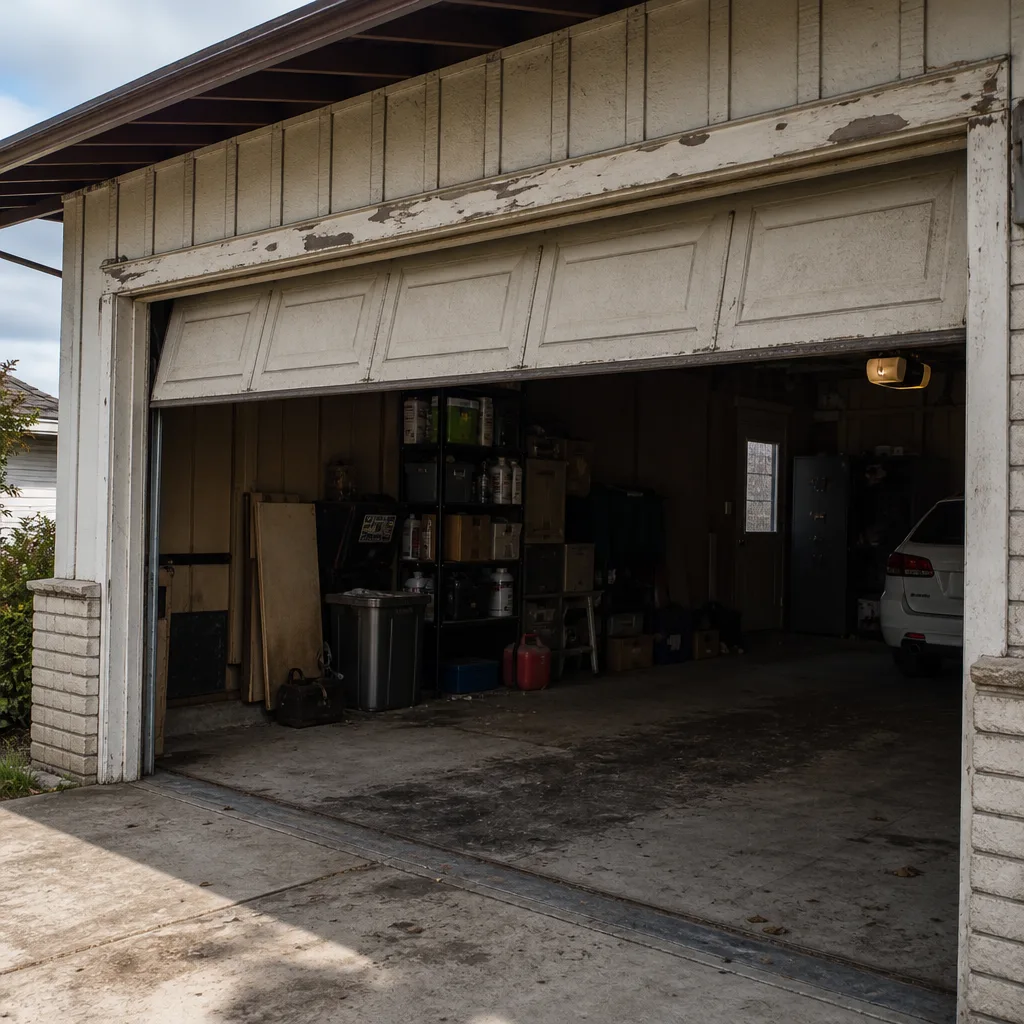 Before
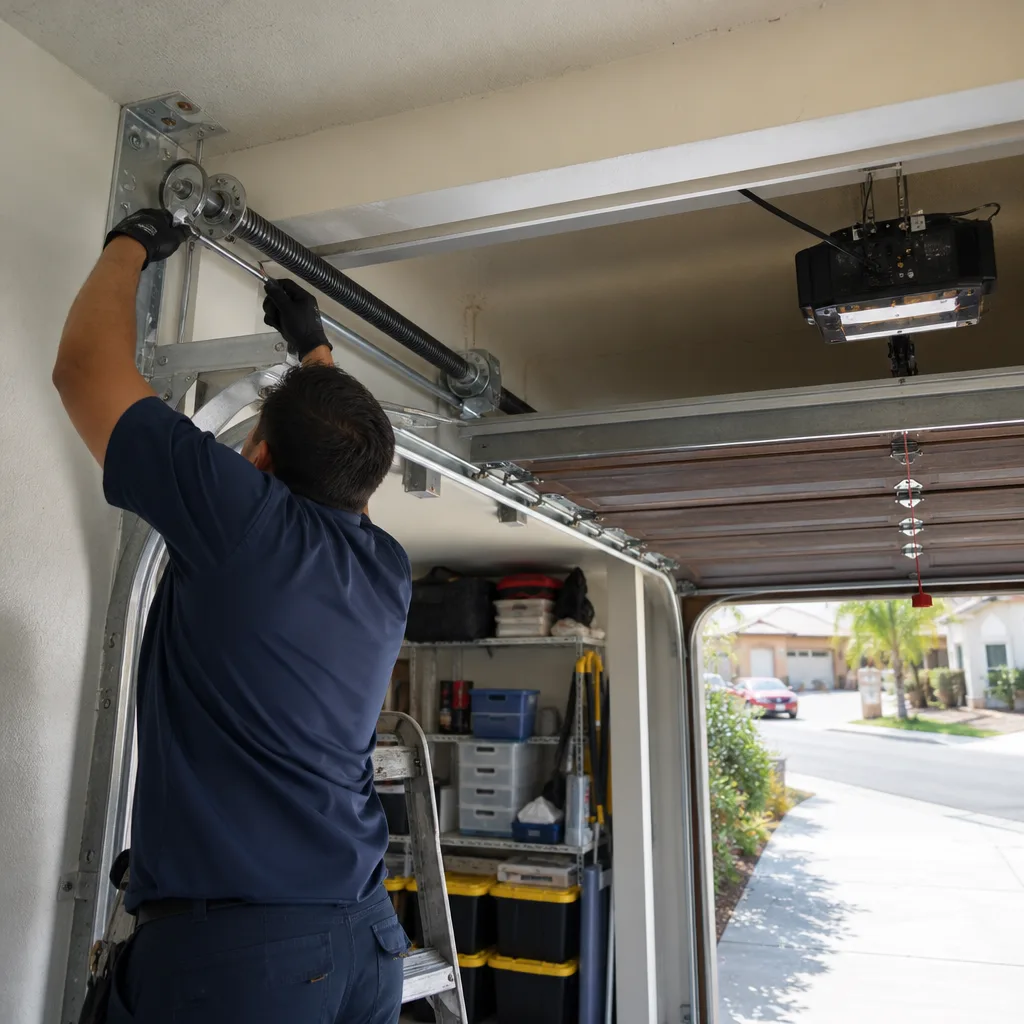 After
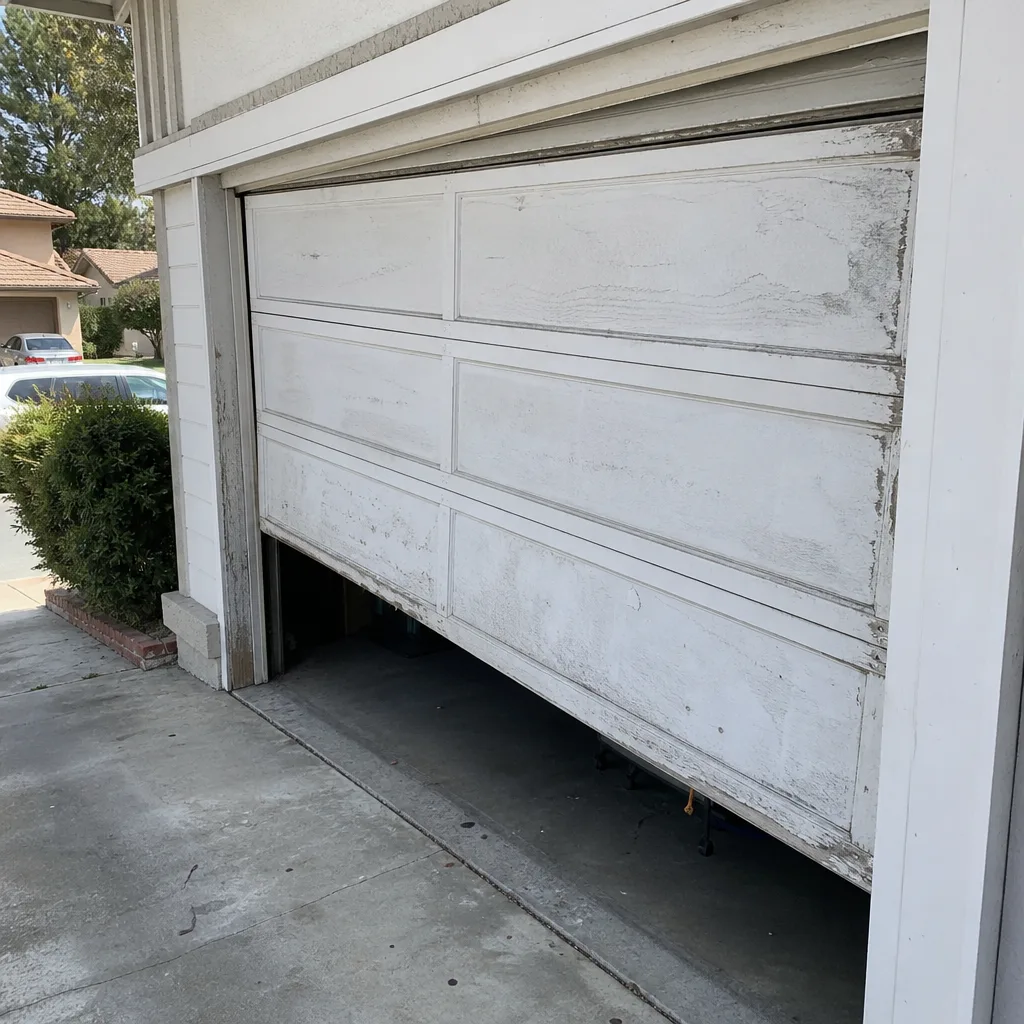 Before
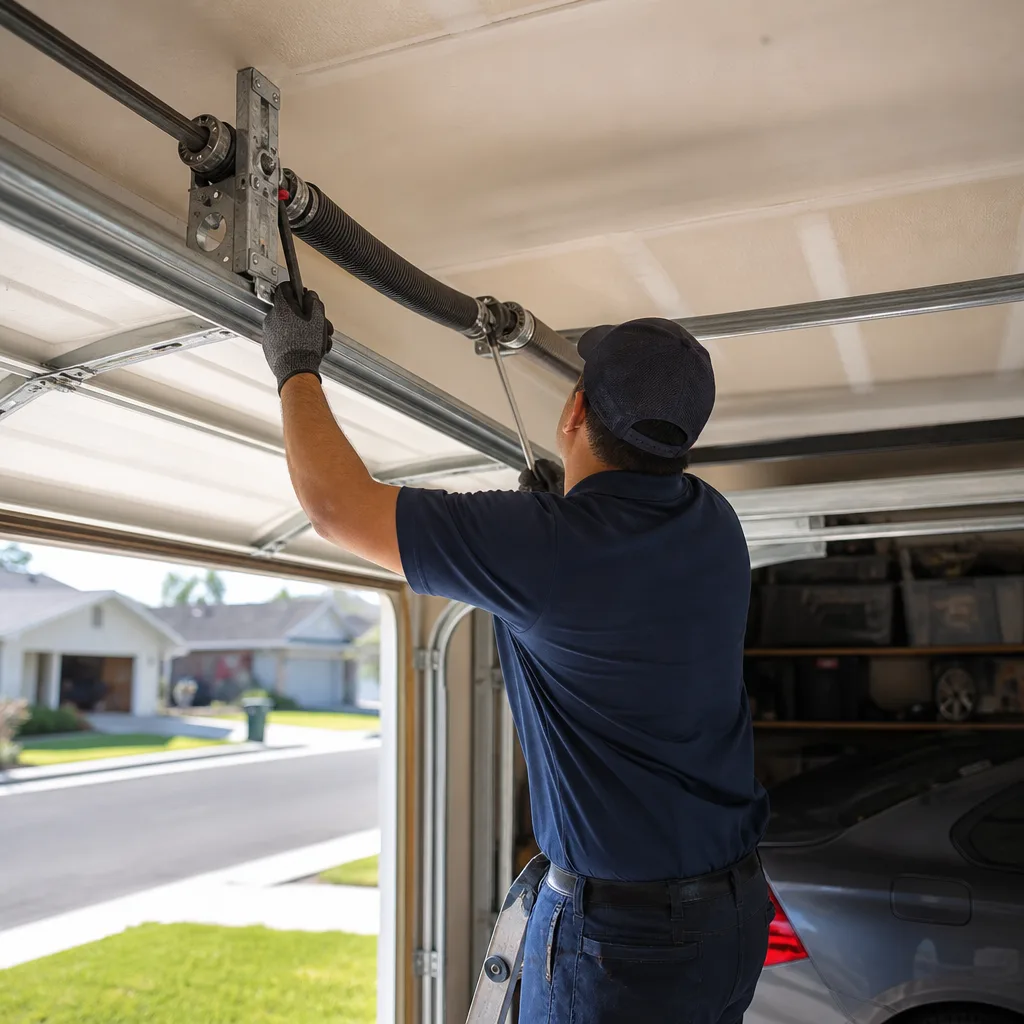 After
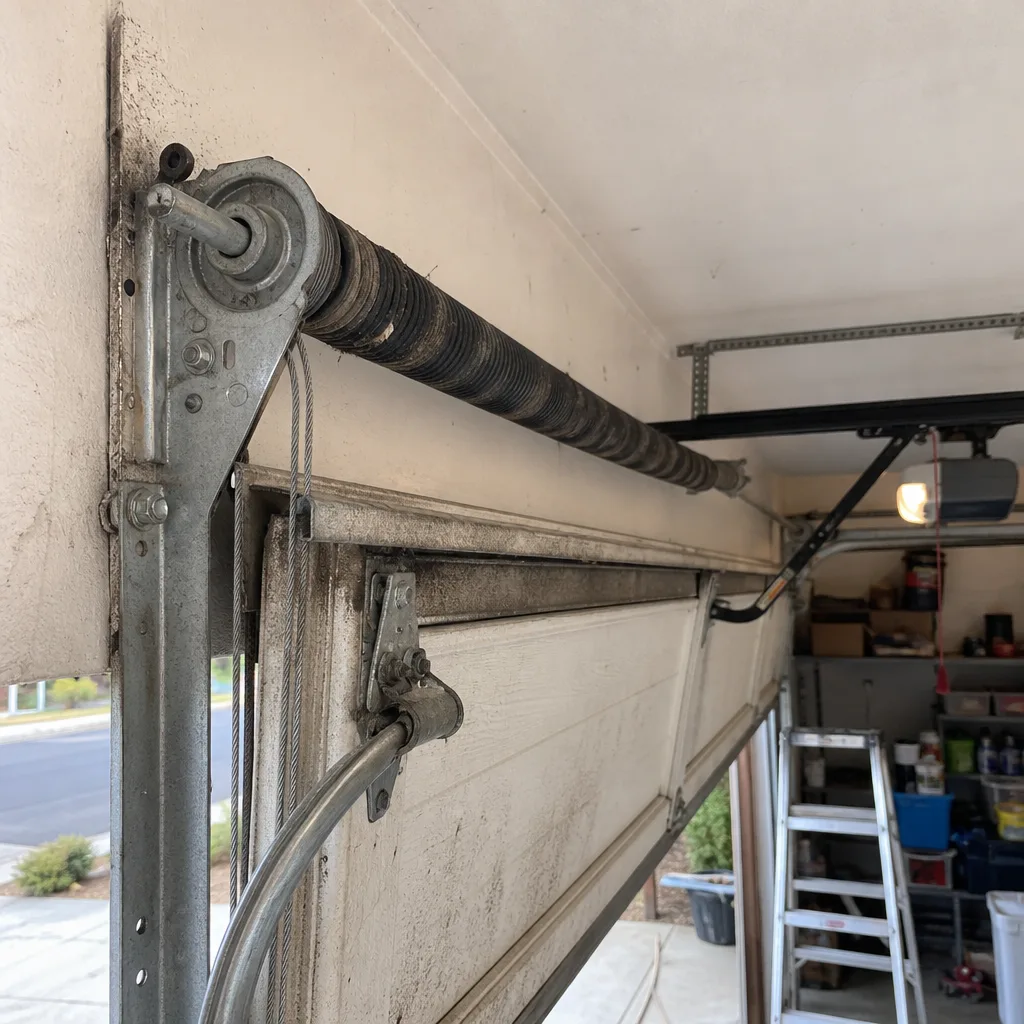 Before
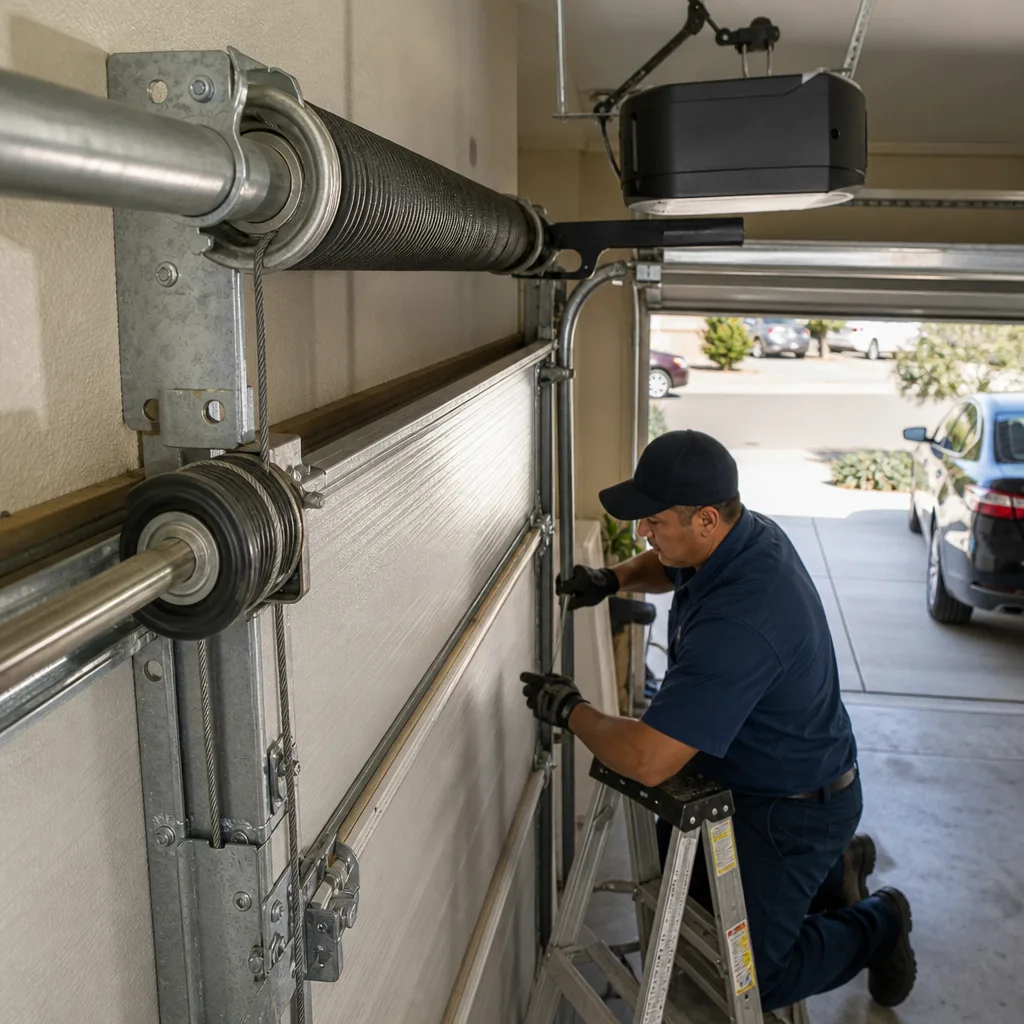 After
When to Call a Professional
Some garage door issues are simple enough to identify but not simple enough to fix safely. If your door is heavy to lift manually, makes a grinding noise, or hangs unevenly in the opening, the springs are failing or the tracks are out of alignment – both of which get worse, not better. If your opener runs but the door doesn’t move, the gear is stripped or the coupler has failed. If your panels are dented, cracked, or showing rust through the paint, replacement is more cost-effective than repair. None of these are situations to troubleshoot by trial and error. SD Garage Door is a garage-door-only specialist in San Marcos – we work on LiftMaster, Chamberlain, Genie, Clopay, Amarr, Wayne Dalton, Craftsman, and Raynor – and we’ll repair what can be repaired before recommending replacement. If your door or opener is acting up, call (833) 589-6906 for a free estimate. We’re happy to assess the problem and give you an honest opinion, and garage door issues in Garage Door Repair in San Marcos are our specialty. You can also learn more about us at the SD Garage Door home page.
Frequently Asked Questions
A new garage door in San Marcos typically costs $1,200 to $4,500 installed, depending on size, material, insulation, and hardware. A basic 16-by-7 non-insulated steel door starts around $1,200, while an insulated 24-gauge door with a wood-look finish and windows runs $2,800 to $4,500. Custom sizes and real wood push higher. Call (833) 589-6906 for an exact quote – estimates are free.
The 16-foot-wide by 7-foot-high single door is the most common size in San Marcos tract developments built from the 1980s through the 2000s. Older custom homes and hillside properties often have 8-foot-high or 18-foot-wide doors instead, which changes the spring and opener specs.
If you live in a master-planned community with architectural review – common in San Elijo Hills and other San Marcos developments – yes, you likely need HOA approval before replacing your garage door. Check your CC&Rs or call your HOA management company before ordering. The review can take up to 30 days.
Standard torsion springs rated for 10,000 cycles last roughly seven to ten years under normal use. High-cycle springs rated for 25,000 cycles can last fifteen years or more. The heat in San Marcos doesn’t directly shorten spring life, but doors used multiple times daily will wear through cycles faster.
Most common repairs – broken springs, off-track doors, snapped cables, failed opener gears – can be diagnosed and fixed the same visit because we stock parts for major brands and common San Marcos door sizes on our trucks. We’ll confirm availability and the exact price before any work begins. Call (833) 589-6906 for same-day scheduling.
No. We quote the repair price after we assess the door, and we confirm it with you before any work starts. The price you agree to is the price you pay. If we find an additional issue during the repair, we’ll stop and discuss it with you before proceeding.
We work on LiftMaster, Chamberlain, Genie, Clopay, Amarr, Wayne Dalton, Craftsman, and Raynor – the eight most widely installed garage door and opener brands. You don’t need to replace a working system just because it’s not our preferred brand. We’ll repair what you have when repair makes sense.
The Bottom Line
A garage door that works in San Marcos is a garage door matched to this specific climate, this housing stock, and these HOA rules. That means 24- or 25-gauge insulated steel on any exposed opening, the right spring cycle rating for how you use the door, an opener sized to the door’s actual weight, and an HOA approval in hand before the order goes in. Skip the generic advice and the 40-door comparison charts. The right answer for your San Marcos home is one of maybe a dozen configurations, and finding it starts with a proper measurement and an honest assessment of what you already have. Garage doors are all we do, and we’re happy to help you get it right.
Written by the team at SD Garage Door, serving San Marcos since 2014.